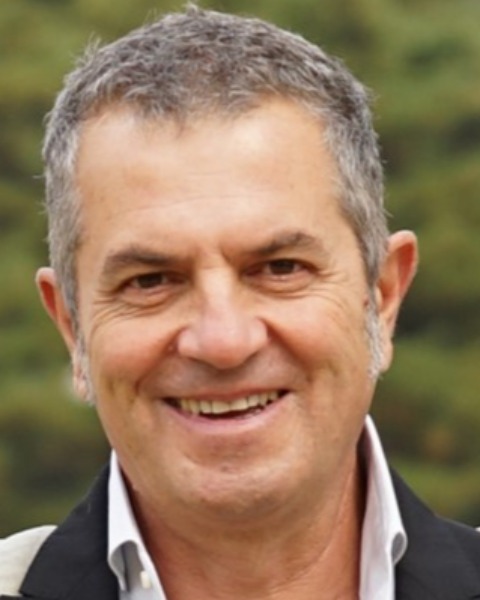
Professor
University of Trieste
Trieste, Friuli-Venezia Giulia, Italy
Prof. Gianni Pedrizzetti was born in Prato (Italy) in 1963, Married in 1989, with 3 children (1996, 2001, 2008).
Since 2015, Chair of Industrial Bioengineering Department of Engineering and Architecture, University of Trieste, Italy.
PREVIOUS ACADEMIC POSITIONS:
2006 – 2015 Professor, University of Trieste, Italy
1998 – 2006 Associate Professor, University of Trieste, Italy
1992 – 1998 Assistant Ptrofessor, University of Firenze, Italy
EDUCATION
1992 PhD, School of Engineering, University of Padova, Italy
1987 Laurea (MS) in Civil Engineering, School of Engineering, University of Firenze, Italy
VISITING PROFESSOR:
University of California, Irvine. Mount Sinai School of Medicine, NY. University of Cambridge, UK. Universidad Politecnica de Madrid, Spain. University of California San Diego, CA.
TEACHING ACTIVITY
Teaching started in 1992. Current commitments are:
2015 – present Course of “Bio-Fluid Dynamics”, MS program in Clinical Engineering, University of Trieste
SCIENTIFIC PUBLICATIONS
Author of 3 books (one textbook, one monograph and one edited book).
Most Recent Book: Pedrizzetti G. Fluid Dynamics for Cardiovascular Engineering. Springer-Nature 2022 (ISBN 978-3-030-85942-8).
Author of 5 cover images and of year 2013 cover for Nature Review Cardiology.
Author of 170+ papers in international journals, with 8000+ citations and h-index 45 (source: Scopus)
Author of 14+ granted patents in collaboration with industry
Invited speaker at numerous international conferences both in cardiology and engineering.
BIO SKETCH
His scientific activity is about cardiac mechanics, with a focus on fluid dynamics and the interaction between blood flow and cardiac tissues. Research methods are grounded on theoretical and computational techniques and progressively evolved toward the development of medical imaging analysis aimed to extract mechanical and functional information about cardiac physiology and pathology for clinical applications. Along this line he pioneered the study of cardiac fluid dynamics and cardiac deformation and introduced new evaluations of cardiac function that are used in clinical cardiology.
As a major feature, his approach is deeply interdisciplinary, while it keeps the methodological rigor coming from theoretical physics, it extends profoundly into medical research with the objective to transfer theoretical and engineering methods to contribute to clinical outcomes.
Biomechanical Assessment of the RV in Tetralogy of Fallot - Shape isn't All that Matters
Thursday, February 5, 2026
8:00 AM - 8:15 AM