Rapid Fire Session
Syed Murtaza Arshad, MSc
PhD Candidate
The Ohio State University
Columbus, Ohio, United States
Syed Murtaza Arshad, MSc
PhD Candidate
The Ohio State University
Columbus, Ohio, United States
Lee C. Potter, PhD
Professor
The Ohio State University, Ohio, United States
Preethi S. Chandrasekaran, MSc
Research Associate
The Ohio State University
Columbus, Ohio, United States
Yingmin Liu, PhD
Research Engineer
The Ohio State University
Columbus, Ohio, United States
Christopher D. Crabtree, PhD, MSc, BSc
Research Scientist
The Ohio State University
Columbus, Ohio, United States
Matthew S. Tong, DO
Associate Professor - Clinical
The Ohio State University
Columbus, Ohio, United States
Juliet Varghese, PhD
Assistant Professor
The Ohio State University
Columbus, Ohio, United States
.jpg "Rizwan Ahmad, PhD photo")
Rizwan Ahmad, PhD
Professor
The Ohio State University
Columbus, Ohio, United States
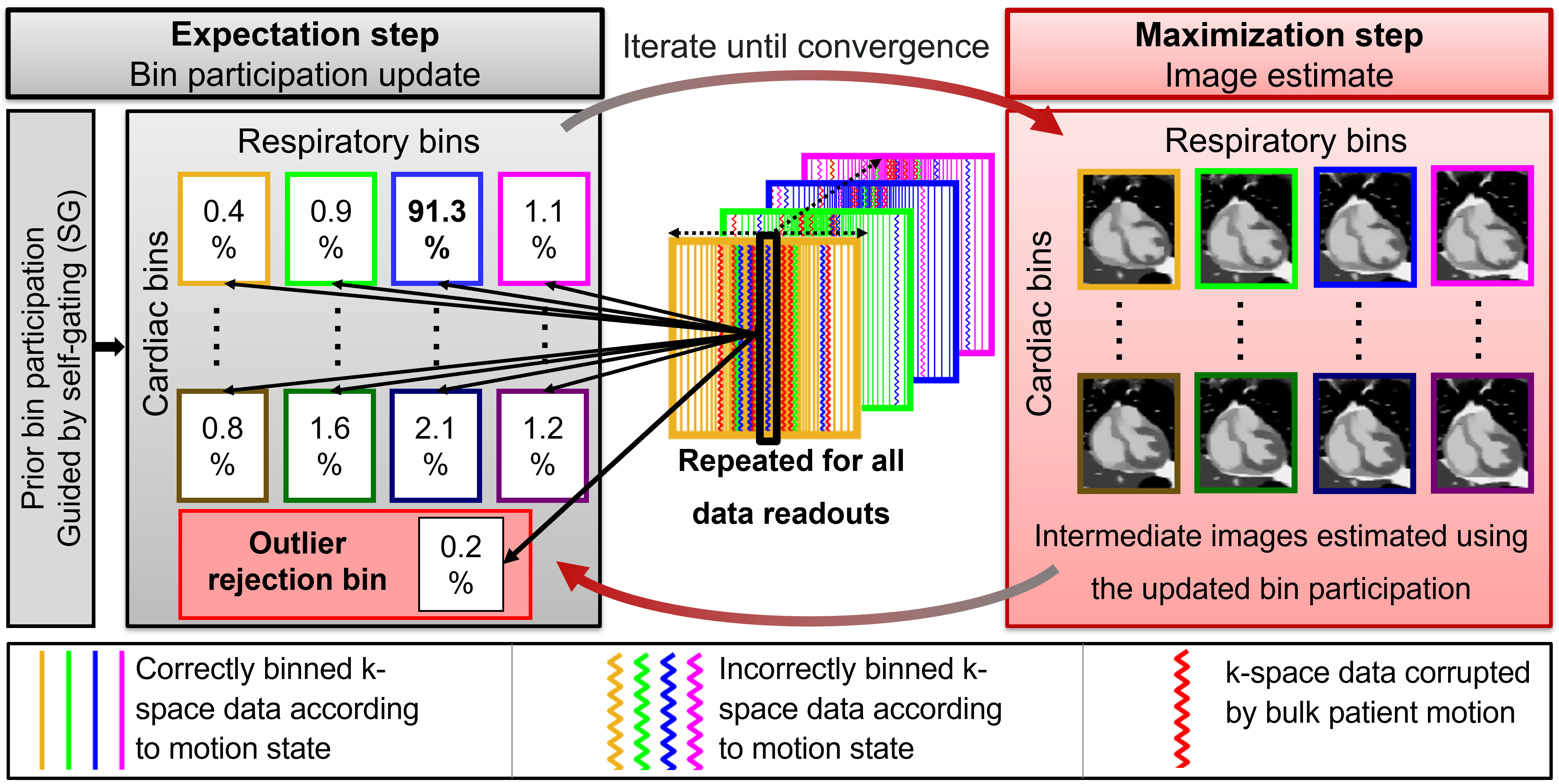 Fig. 2: Representative sagittal cine frames at end-expiratory and end-inspiratory phases for three volunteers reconstructed using CS and EMORe. Corresponding temporal profiles along the x–t and y–t dimensions are presented for qualitative assessment of temporal consistency and boundary definition. Arrows highlight the comparison of motion artifacts suppressed by EMORe. (†Volunteer instructed to simulate coughing during the final 30 seconds of the scan.)
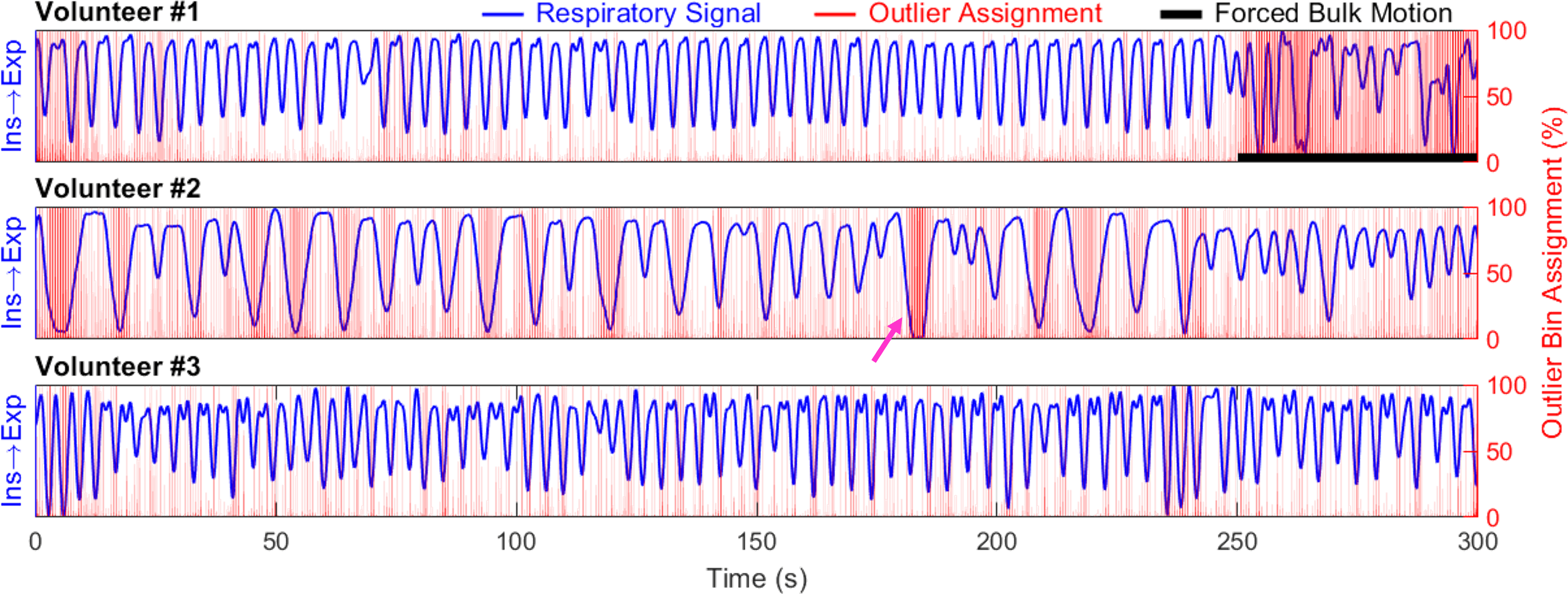
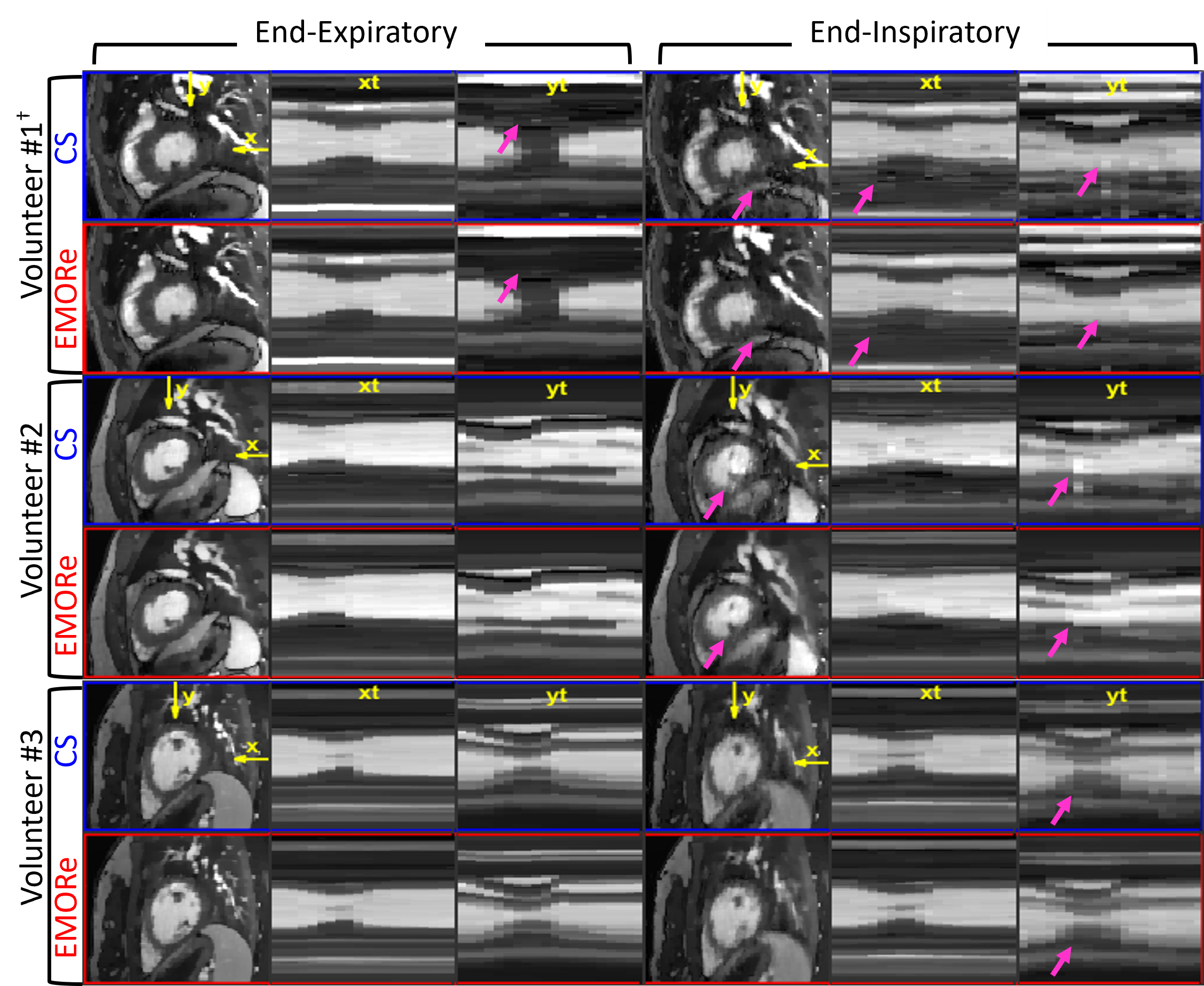 Fig. 3: Self-gating-based respiratory surrogate signals (blue) from the three volunteers in Fig. 2 overlaid with the assignment percentage to the outlier bin for the corresponding readout (vertical red bars). Aggressive outlier rejection during the instructed coughing interval (horizontal black bar, volunteer #1) and potential deep breath (magenta arrow, volunteer #2) supports EMORe’s ability to reject motion-corrupted (outlier) data.