Late Breaking Clinical Trials
Virtual Recording

Suresh Anand Sadananthan, PhD
Research Scientist
A*STAR Institute for Human Development Potential
Singapore, Singapore
Suresh Anand Sadananthan, PhD
Research Scientist
A*STAR Institute for Human Development Potential
Singapore, Singapore
Yeshe Manuel Kway, PhD
Postdoc Research Fellow
University of Oxford, United Kingdom
Navin Michael, PhD
Principal Scientist
A*STAR Institute for Human Development and Potential, Singapore
Delicia Shu Qin Ooi, PhD
Assistant Professor
National University of Singapore, Singapore
Fabian Yap
Professor
KK Women's and Children's Hospital, Singapore
Kok Hian Tan
Professor
KK Women's and Children's Hospital, Singapore
Keith M. Godfrey
Professor
University of Southampton, United Kingdom
Yung Seng Lee
Professor
National University of Singapore, Singapore
Peter D. Gluckman
Professor
A*STAR Institute for Human Development and Potential, Singapore
Yap Seng Chong
Professor
National University of Singapore, Singapore
Marielle Valerie Fortier, MD
Associate Professor
KK Women's and Children's Hospital, Singapore
Mayank Dalakoti
Associate Consultant
National University Heart Centre Singapore, Singapore
S Sendhil Velan
Professor
University of Massachusetts Amherst, United States
Johan Eriksson
Professor
A*STAR Institute for Human Development and Potential, Singapore
Indian children exhibited smaller LV mass and ventricular volumes (EDVI, ESVI, SVI) compared to Chinese and Malay children (Fig. 1), suggesting a slower cardiac growth trajectory or adaptive mechanisms that preserve EF despite reduced chamber size. Chinese and Malay children exhibited larger hearts and higher LV volumes, possibly reflecting more robust growth or early adaptation to greater metabolic demands. EF was preserved across all ethnicities, indicating maintained systolic function despite structural differences.
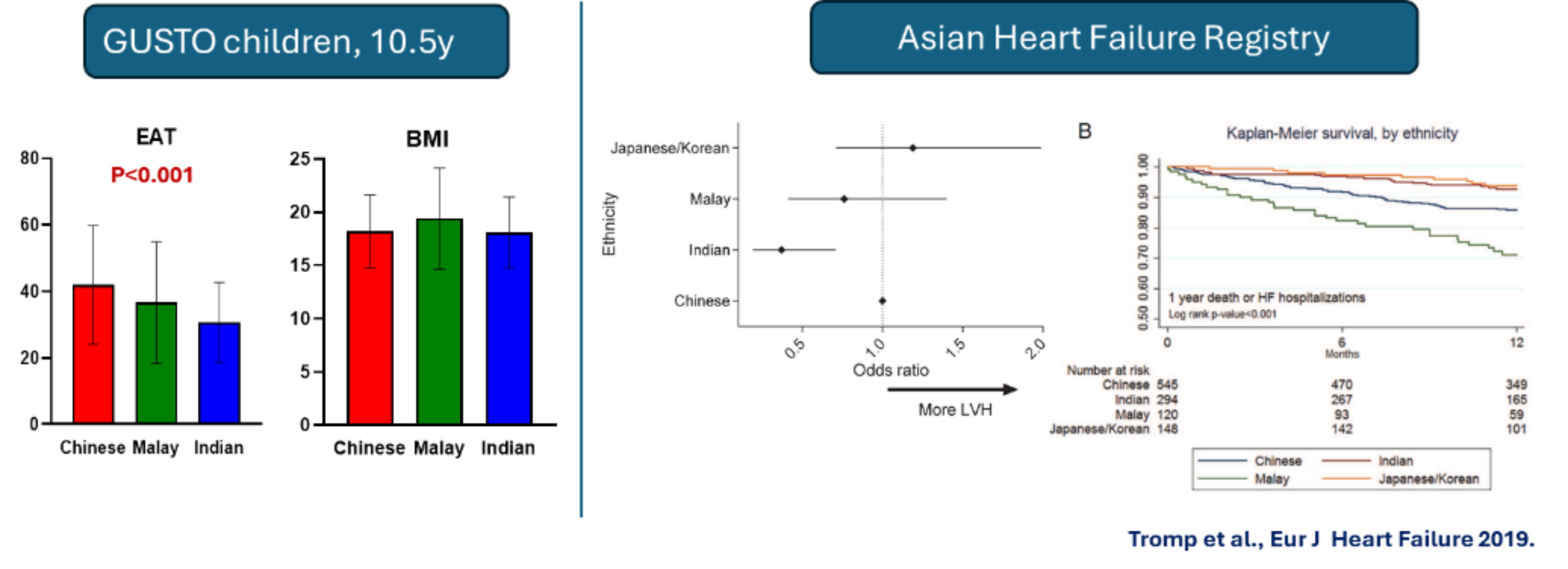
Despite similar BMI, Chinese children had higher EAT (41.9±17.8 cc) than Malay (36.6±18.3 cc) and Indian (30.7±12.0 cc) children (Fig. 2). The higher EAT in Chinese children was consistent with adult data from the Asian Heart Failure Registry showing greater prevalence of heart failure with preserved ejection fraction (HFpEF) in Chinese adults compared to Malays and Indians. EAT was positively associated with GlycA (β=0.001 mmol/L; CI=0.0004, 0.002; p=0.002) independent of BMI.
Conclusion:
The positive BMI-independent association of EAT with GlycA highlights its potential inflammatory role in the pathogenesis of cardiometabolic disease. These early observations of higher EAT and cardiac size in Chinese children may serve as subclinical markers of future cardiovascular risk, especially if obesity or metabolic syndrome develops in adulthood.
Figure 1. Ethnic differences in cardiac structure and function in GUSTO children at age 10.5 years 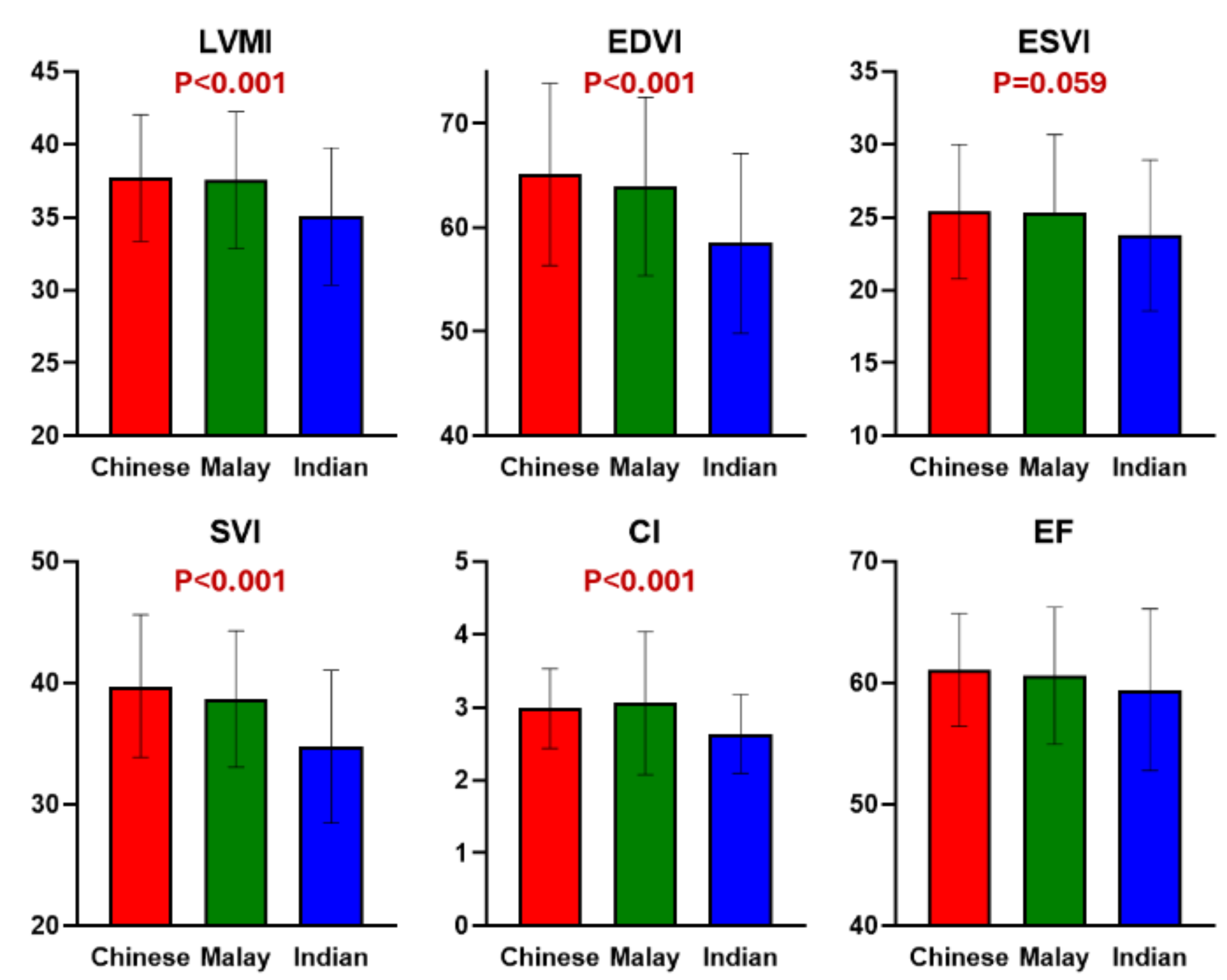 Figure 2. Ethnic differences in epicardial fat (GUSTO children) and HFpEF prevalence (Asian Heart Failure Registry)